

KYC remediation is the corrective programme that brings a stale or deficient customer file back to today’s compliance standard. Do it well by scoping with data first, prioritising cases by regulatory exposure and gap severity, and automating every repeatable task so analysts spend their time on judgement calls, not paperwork chases.
It differs from business as usual in two ways worth separating clearly:
-
Periodic refresh runs on a fixed schedule (annual, triennial) regardless of what changes; continuous KYC monitors trigger events in real time and updates files as they happen.
-
Remediation is neither. It is a bounded, backward-looking project to close a known population of gaps, usually with a deadline attached.
Regulators increasingly expect remediation to be productive rather than a check-the-box exercise, meaning it should produce measurable risk-score changes, not just closed tickets. Get the scoping and automation right and remediation stops being an annual firefight and starts looking like a repeatable, defensible programme.
Key Takeaways
Effective KYC remediation depends on data-driven scoping, risk-tiered prioritisation, and automating repeatable tasks while keeping analysts responsible for final judgement calls.
| Point | Details |
|---|---|
| Scope with data first | Run a portfolio-wide gap analysis against live registries before opening any case. |
| Rank on two axes | Score cases by regulatory exposure and gap severity, not file age alone. |
| Report by risk tier | Track completion, outstanding cases and gap resolution rate separately by tier. |
| Automate the mechanical, not the judgement | Use AI for OCR, entity matching and prioritisation, always paired with analyst validation. |
| Use a directory to shortlist vendors | Heliolus AI helps teams filter remediation-capable vendors by integration and audit fit before committing to an RFP. |
Table of Contents
What triggers a KYC remediation programme?
Remediation rarely starts by choice. It starts because something forced the issue, and recognising which trigger you are dealing with shapes how you justify the project internally and how you set the deadline.
The most common triggers include:
-
Regulatory change or a supervisory finding, including consent orders that mandate a lookback review of specific customer segments.
-
System migrations, where a new core banking or case management platform surfaces fields that were never captured or validated under the old standard.
-
Policy upgrades, such as tightening beneficial ownership thresholds or adding new PEP screening criteria.
-
Backlog accumulation, where a large proportion of periodic reviews have simply fallen overdue.
A registry change is a classic example: a national beneficial ownership register updates its data structure, and suddenly a chunk of your legal-entity files show broken or incomplete ultimate beneficial owner chains. These triggers are well documented across the industry and each demands a different urgency. Regulator-imposed deadlines are fixed and non-negotiable; internally driven backlog projects have more flexibility, but only if you can show the board a credible completion date before a supervisor asks for one.
How does the KYC remediation process actually work?
A remediation programme succeeds or fails on the quality of its first step: the gap analysis. Skip it, or do it manually file by file, and you will spend months discovering the scope of the problem instead of fixing it.
-
Run a portfolio-wide gap analysis first. Compare every file against your current data standard and live registries (beneficial ownership, sanctions, corporate registers) before opening a single case. This turns an unknown backlog into a scored, prioritised list.
-
Prepare each case automatically. Use pre-population from existing records, standard document request templates by entity type, and pre-set escalation rules for non-response.
-
Send targeted outreach. Request only what is genuinely missing, not a blanket refresh pack, and track response deadlines against escalation triggers.
-
Review against a fixed checklist. Analysts validate submitted documents against the data standard, record a clear decision (accept, reject, escalate), and log the rationale.
-
Build the audit trail as you go. Every decision, document version and analyst action needs a timestamp, not a retrospective reconstruction.
-
Close the case and update the source system. Closure means the core customer record reflects the new data, not just that a workflow ticket has been marked done.
Pro Tip: Run the gap analysis before you staff the project. Teams that hire analysts first and scope second consistently end up over-resourced on low-risk files and under-resourced on the ones that matter.
Practitioner guidance on remediation workflow design consistently points to this same compare, surface, request, review pattern as the template worth adapting, whatever case management tool sits underneath it.
How should you prioritise and measure remediation progress?
Ranking cases on a single axis, such as file age, wastes analyst capacity on low-risk backlog while genuine exposure waits its turn. A two-axis model works better: score each case on regulatory exposure (jurisdiction risk, product type, customer category such as PEP or correspondent banking) and separately on gap severity (missing UBO data scores higher than an expired ID document alone).
Once cases are scored, track a small set of metrics that actually mean something to a supervisor:
-
Completion by risk tier — the percentage of high-risk cases closed versus medium and low tiers, reported separately, not blended.
-
Outstanding cases by risk tier, so exposure concentration is visible at a glance.
-
Gap resolution rate, the share of identified gaps actually closed versus escalated or accepted with a rationale.
-
Throughput and outreach response rate, to forecast realistic completion dates.
The strongest evidence of a productive programme is not case volume. It is whether reviews actually change risk profiles or generate SARs, and whether downstream alert volumes drop once files are corrected. A board report built around risk-tier movement lands very differently than one built around a raw case count, and a supervisor reading it will notice the difference immediately.
Where do technology and AI genuinely help in remediation?
Automate the repeatable first, not the judgement calls. Gap analysis against registries, document capture and classification, outreach tracking, and audit-trail logging are all mechanical tasks that AI and workflow tools handle reliably at scale, freeing analysts for the decisions that actually require professional scepticism.
Specific AI use cases worth evaluating:
-
Document OCR and data extraction from passports, corporate registers and ownership charts, cutting manual keying to near zero.
-
Entity matching against sanctions lists and beneficial ownership registries, surfacing discrepancies a manual review would miss.
-
Prioritisation assistance, where a model suggests risk-tier placement, which an analyst then confirms rather than blindly accepting.
Every one of these needs to be paired with human validation, not left to run unsupervised, because a wrongly closed high-risk file is a supervisory finding waiting to happen.
Integration is where projects usually stall, not the AI model itself. Any remediation platform needs live connections to registry APIs, sanctions and PEP screening sources, the core customer record system and the case management tool analysts already use daily. When evaluating vendors, push hard on data coverage by jurisdiction, explainability of scoring decisions, service-level commitments on registry refresh, and whether the system produces audit evidence a regulator can actually inspect.
Pro Tip: Ask any vendor for a sample audit trail export before signing, not after. If it cannot reconstruct a single case decision end to end, it will not survive a supervisory review.
What mistakes derail remediation programmes?
Most delays trace back to a handful of avoidable design choices, and the pattern repeats across firms and jurisdictions.
-
Scope creep from ad-hoc discovery. Define the data standard before opening cases, or the population keeps growing mid-project.
-
Fragmented status tracking. Multiple spreadsheets and email chains mean nobody, including the project lead, actually knows true completion status.
-
Skipping the pilot. Roll out to a small cohort first to validate data sources and realistic throughput before committing the full team.
-
Weak exception governance. Without clear escalation rules, edge cases pile up unresolved and quietly inflate the backlog.
-
Mismatched resourcing. High-touch relationship customers need experienced analysts, not the newest hire; low-risk retail files are exactly where automation should carry the load.
A single source of truth for case status, even a well-built dashboard, resolves more of these problems than any amount of extra headcount.
How is quality assurance handled once remediation is done?
QA cannot be an afterthought bolted onto the end of a project. A sampling methodology should cover a statistically meaningful share of closed cases, with full QA reserved for the highest-risk tier and any case that triggered an escalation.
-
Sample by risk tier, weighting higher-risk cases towards full review rather than a flat percentage across the board.
-
Route exceptions through formal approval, with a named sign-off and a documented rationale, not a verbal override.
-
Flag enhanced monitoring on any file where a gap was closed but residual risk indicators remain.
Migrating remediated data back into core production systems, rather than leaving it in a remediation-only database, is what actually prevents the same files reappearing in the next backlog review.
What do regulators and industry guidance say about remediation?
Regulators increasingly expect remediation to produce material updates, not administrative closure. The distinction between a programme that moves risk metrics and one that simply processes cases is now central to how supervisors assess effectiveness.
That framing comes from EY’s guidance on risk-based refresh programmes, and it aligns with the Basel Committee’s long-standing position that effective KYC risk management has to be consolidated:
-
A consolidated approach across business lines and jurisdictions reduces the blind spots that let gaps persist for years without detection.
-
FATF’s guidance on beneficial ownership transparency sets the documentation bar remediation of legal-entity files must clear.
-
Practitioner reporting consistently favours data-driven scoping over manual file-by-file review, because it turns an unbounded backlog into a prioritised, resourceable programme from day one.
What compliance teams get wrong about vendor selection
Aithea works at the intersection of regulation, technology and AI, helping compliance teams navigate the vendor landscape for financial crime tools rather than build them in-house blind.
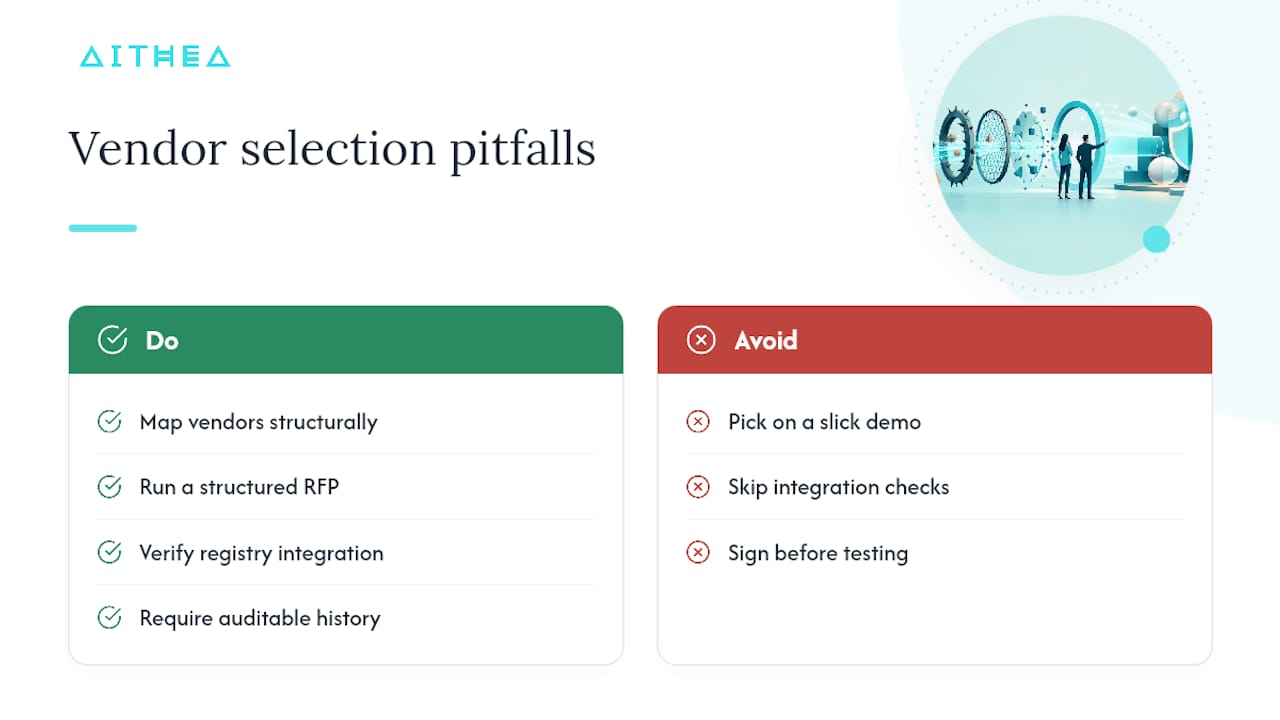
The mistake we see most often isn’t technical. It’s procurement discipline: teams pick a remediation platform based on a slick demo, then discover mid-project that it cannot integrate with their existing registry feeds or produce an auditable case history. A structured vendor mapping and RFP process catches that mismatch before contract signature, not six months into implementation.
How Heliolus AI speeds up remediation vendor selection
Choosing the wrong remediation platform costs more than the licence fee. It costs the months spent discovering, mid-project, that the tool cannot talk to your registry feeds or produce an audit trail a supervisor will accept. That is the gap Heliolus AI was built to close.

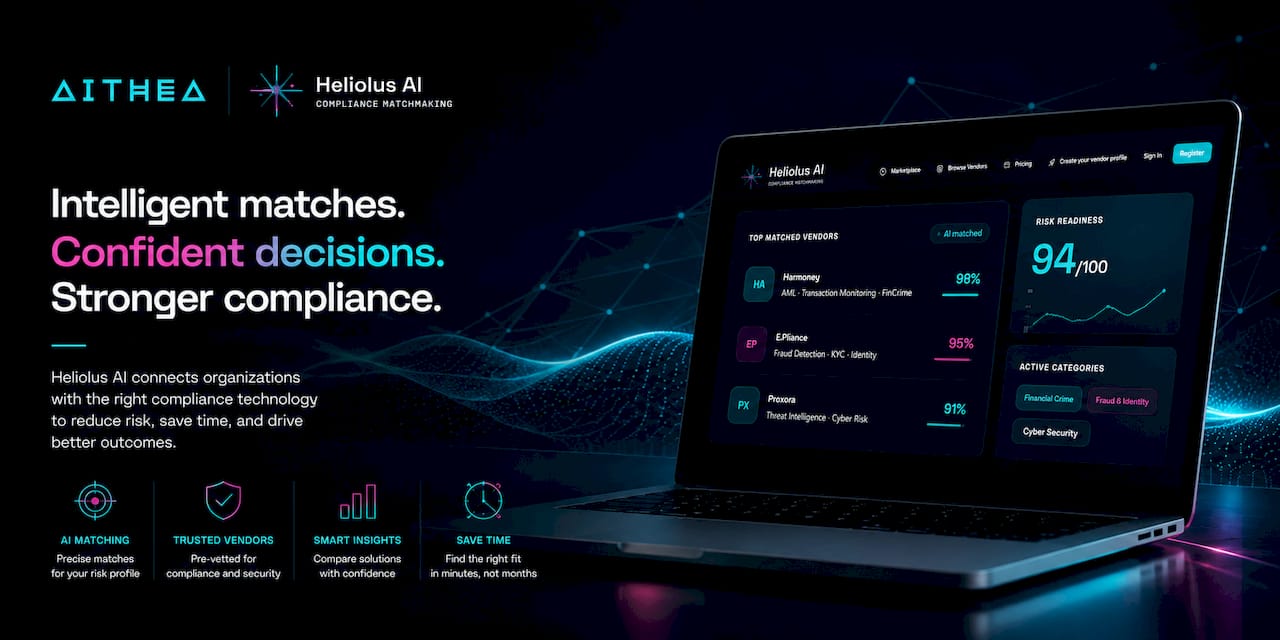
Heliolus AI is Aithea’s AI-powered RegTech directory, built specifically to help compliance teams map the market of remediation-capable vendors against their own real requirements, not marketing copy. Instead of running a manual RFP against a handful of vendors you already knew about, you filter by data coverage, integration type, explainability and audit capability, and get a shortlist that actually fits your remediation programme’s risk profile. That cuts time-to-contract significantly compared with a cold RFP process, because the feature-fit assessment happens before the vendor calls start, not during them.
If your remediation programme is stuck comparing vendors on gut feel, visit the Heliolus AI directory and start building a shortlist based on what your data and case volume actually demand.
Sources
FAQ
What does KYC remediation mean?
KYC remediation is a corrective programme that identifies and fixes gaps in existing customer due diligence files, bringing them up to a current data standard through targeted review and document collection.
What does remediation mean in banking?
In banking, remediation refers to any structured programme to correct identified deficiencies, whether in KYC files, transaction monitoring, or other compliance controls, usually driven by a regulatory finding or internal audit.
Is KYC a legal requirement in the UK?
Yes, UK firms must carry out customer due diligence under the Money Laundering, Terrorist Financing and Transfer of Funds Regulations, and supervisors expect remediation whenever existing files fall short of that standard.
How do you resolve a KYC issue?
Resolve a KYC issue by identifying the specific data or document gap, requesting the missing information through a targeted outreach process, validating what comes back against your data standard, and logging the decision with a clear audit trail. Platforms surfaced through directories like Heliolus AI can help teams find tools built specifically to manage that workflow at scale.