

Every successful case management integration in a regulated environment follows the same pattern: an API-first architecture with event-driven middleware, rolled out in phases rather than a single cutover. That combination delivers the three things regulated programmes actually need.
- A single source of truth, so case status, documents and risk scores never diverge between systems
- Faster triage, because events trigger workflow actions the moment a status changes, not on the next batch cycle
- Stronger auditability, since every integration point logs who changed what, when, and why
Pro Tip: Before signing off any integration scope, require two non-negotiable controls upfront: role-based access control mapped to the case lifecycle, and an immutable audit trail covering every system in the chain, not just the case management platform itself. Organisations that formalise integrated case management standards, such as the Veterans Health Administration's directive, build documentation of sequential case steps directly into the electronic record. That is the benchmark worth copying.
Key Takeaways
Regulated case management integration succeeds when API-first, event-driven architecture is paired with documented audit metadata and a phased rollout, not a single big-bang deployment.
| Point | Details |
|---|---|
| Choose the right pattern | Match one-way/two-way and sync/async integration types to the actual workflow need, not convenience. |
| Design events around case states | Map case lifecycle transitions to events so downstream systems react in real time. |
| Specify audit fields upfront | Require actor, timestamp, reason and previous state on every record change across every connected system. |
| Build in error handling | Use idempotent webhooks, exponential backoff retries and a dead-letter queue for failed events. |
| Get structured vendor support | Aithea's vendor evaluation and matchmaking service helps procurement teams shortlist API-first, audit-ready platforms. |
Table of Contents
- What is case management integration and which pattern fits?
- How should the integration architecture be designed?
- What API and webhook features actually matter?
- What security and compliance controls are non-negotiable?
- How do you run a phased implementation roadmap?
- What does the evidence say about integration outcomes?
- How do people, data and specialist tools connect across the case lifecycle?
- How do you map and transform data between systems?
- How should errors and retries be handled?
- How do you optimise integration performance at scale?
- What should you monitor and log in production?
- Case management integration: practical architecture and compliance checklist
- Getting your integration project off the ground
- Sources
- FAQ
What is case management integration and which pattern fits?
Case management integration means connecting a case management system to the other tools a case touches: identity verification, document storage, communication platforms, risk engines and reporting layers. The pattern you choose depends on direction and timing, and getting this choice wrong is the single most common cause of failed integration projects.
One-way integrations push data outward without expecting a response, such as exporting closed-case summaries to a data warehouse for reporting. They are simple to build and low-risk, but useless when the source system needs to react to downstream changes. Two-way integrations synchronise both directions, which is what you need when a KYC decision made in a screening tool must update case status and trigger a new task inside the case management software.
Synchronous REST calls suit anything requiring an immediate answer, like checking a sanctions list before letting a case proceed. Asynchronous webhooks or message queues suit high-volume, non-blocking work, such as notifying a document management tool that a new file has landed.
- One-way: reporting, analytics feeds, read-only dashboards
- Two-way: workflow triggers, status synchronisation, case escalation
- Synchronous: identity checks, real-time eligibility decisions
- Asynchronous: notifications, bulk document processing, audit log streaming
A middleware layer sits between these systems and lets you modernise incrementally. Rather than replacing a legacy case management system outright, middleware absorbs the translation work between old and new interfaces, so you can add a client portal or an AI intake tool without touching the core platform.
How should the integration architecture be designed?
Event-driven design maps naturally onto how a case actually moves: opened, assigned, escalated, reviewed, closed. Each transition becomes an event that other systems subscribe to, rather than a database row that other systems have to poll for changes. This is the architectural shift that separates modern integrated case management from older point-to-point wiring.
Treat each case-state change as a discrete, timestamped event with its own schema, and you get a natural audit trail for free, plus the ability to replay events if a downstream system falls behind or fails. Publish those events to a message bus so multiple consumers, a reporting tool, a notification service, a risk engine, can react independently without the case management platform needing to know who is listening.
API contracts need the same discipline as the events themselves. Version every endpoint explicitly, never break a field's meaning within a version, and design consumers to tolerate additive fields so a schema change on one side does not break integrations on the other.
The real trade-offs to weigh with engineering teams or vendors:
- Latency versus consistency: asynchronous events accept slight delay in exchange for resilience; synchronous calls give immediate consistency but create tighter coupling
- Complexity versus control: a fully custom event architecture gives maximum control but needs in-house engineering capacity to maintain
- Vendor lock-in: closed, proprietary integration layers save time initially but limit your ability to switch tools later
Guidance on integrated case management technical practice consistently favours platforms exposing REST APIs and webhooks over closed, native-only connectors, precisely because open standards keep that switching cost low.
What API and webhook features actually matter?
Procurement teams often specify integrations in vague terms, then discover during implementation that the vendor's API cannot do half of what was assumed. Build the acceptance criteria into the specification itself.
- Full CRUD support on case records, not just read access, so downstream systems can create and update cases, not merely observe them
- Bulk import and export for migration and reporting, tested against realistic data volumes before go-live
- Filtering and pagination on every list endpoint, because a case management system with thousands of active files will time out without them
- Schema stability guarantees, meaning the vendor commits to a versioning policy and deprecation notice period in writing
Webhooks need their own rulebook. Every webhook call should be idempotent, so a duplicate delivery does not create a duplicate case action. Retries need exponential backoff with a maximum attempt count, and every payload should carry a signature the receiving system can verify before trusting it.
Pro Tip: Ask vendors for their documented event schema before contract signature, not after. A vendor that cannot produce one has probably never had a customer push hard enough to demand it.
Your canonical data model should carry, at minimum, actor, actor role, timestamp, action reason and previous state on every record change: the same fields that let large regulated bodies document sequential case management steps for audit purposes.
What security and compliance controls are non-negotiable?
Specifications that skip security detail are the fastest route to a failed audit. Role-based access control with least-privilege defaults should be table stakes, alongside encryption at rest and in transit and an audit trail that cannot be edited after the fact.
- Encrypt data at rest and in transit as a baseline, not an optional upgrade
- Enforce least privilege by default, granting access per role, not per convenience
- Log every access and change event, with no update path that overwrites history
- Require documented incident response procedures from every vendor in the chain
Data residency and lawful processing deserve specific attention for organisations operating across Europe. Case data frequently includes personal and sometimes special category information, so consent capture, retention limits and a documented lawful basis for processing need to be built into the data model, not bolted on afterwards. Where a case management system touches financial crime workflows, this sits alongside anti-money laundering obligations that vary by member state but converge on the same operational need: provable, timestamped decision trails.
Change management and third-party assurance round out the picture. Every configuration change to an integrated system should go through a documented approval step, and vendors should be able to produce assurance evidence, penetration test summaries, SOC 2 reports, on request rather than after an incident forces the question. Programmes built on CMSA's integrated case management standards treat this documentation as a training and competency requirement, not just a technical checkbox.
How do you run a phased implementation roadmap?
Skipping straight to a full rollout is the single most expensive mistake in integration projects. A phased roadmap catches architectural mistakes while they are still cheap to fix.
- Discovery: map every stakeholder team, document existing data flows, and flag compliance gaps against the target architecture before writing a line of integration code
- Design: define the minimal viable event set, the canonical data model, and the API contracts each system must expose or consume
- Build: implement against a test harness that simulates real case volumes, not a handful of sample records
- Test: define rollback triggers in advance, so a failed pilot has a clear, pre-agreed exit rather than a scramble
- Deploy: roll out to a limited case type or team first, watching for the failure modes discovery should have already flagged
- Measure: track service-level objectives, monitor actively, and feed operational learnings back into a documented runbook
Pro Tip: Build the crisis path into your pilot from day one. Practitioners consistently flag that case workflows lacking an automated escalation path for urgent cases fail quietly, because nobody notices until a case has already gone unmanaged for days.
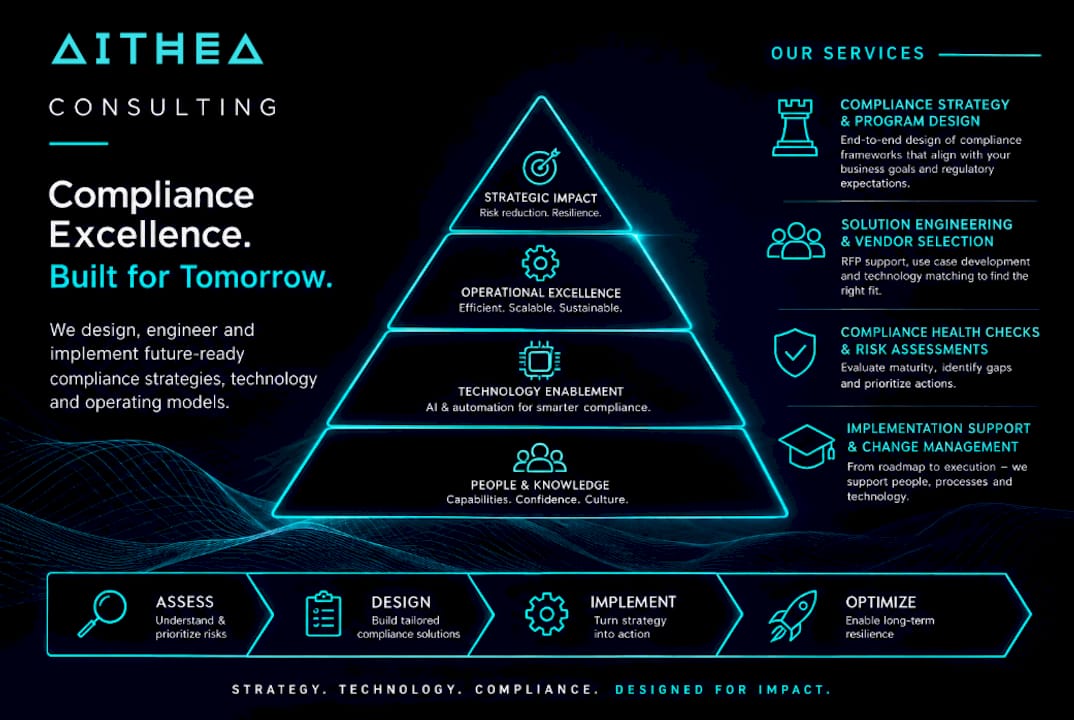
Scaling beyond the pilot means shifting from project mode to governance mode: monitoring dashboards, a named operational owner, and a vendor assurance process that outlives the original implementation team. This is also where procurement teams benefit from a structured vendor evaluation process rather than an ad hoc RFP built from a generic template.
What does the evidence say about integration outcomes?
Two decades of programme evidence back the core claim of this playbook. Studies across Europe and the United States consistently find that sharing care plans and case data across providers improves self-management, patient experience and reduces avoidable service overuse.
Integration that lets a case manager, a specialist and a client see the same live record, rather than three separate versions of the truth, is what actually drives the outcome improvement. The technology is the enabler; the shared workflow semantics are what makes it real.
That distinction between data synchronisation and genuine workflow integration matters more than most procurement documents acknowledge. Copying fields between systems without shared triggers just creates two databases that slowly drift apart.
AI is starting to operationalise parts of this. Ambient intake tools can transcribe and structure a client conversation directly into case fields, risk stratification models can flag high-priority cases before a human reviewer opens the file, and automated audit reporting can compile the evidence a regulator will ask for. None of that removes the need for human oversight and a documented control layer around every AI-generated decision.
How do people, data and specialist tools connect across the case lifecycle?
A case rarely lives inside one system for its whole lifecycle. It opens in an intake tool, moves through a case management platform, touches a document repository, gets reviewed by a risk or compliance specialist using separate screening software, and closes with a report generated somewhere else entirely. Integration is what keeps that journey coherent instead of fragmented across five logins.
The practical challenge is less technical than organisational. A case manager, a specialist reviewer and a client-facing team member each need a different view of the same case, filtered to what their role requires, but built from the same underlying record. Role redesign matters here as much as system wiring: the case manager's role is shifting from coordinator, someone who chases updates between systems, to navigator, someone who interprets what an already-connected system is showing them.
Specialist tools bring their own integration demands. A sanctions screening engine, a document verification service, or a clinical risk model each has its own API shape, refresh cadence and data sensitivity level. The integration layer's job is to normalise those differences so the case record reflects a consistent state regardless of which specialist tool last touched it. Get this wrong and specialists end up working from stale data while believing it is current, which is a worse failure mode than no integration at all, because it looks trustworthy right up until it causes a real error. Building this connective layer with clear ownership per data domain, rather than leaving it to whichever team integrates first, is what separates integrated case management from a collection of loosely linked tools.
How do you map and transform data between systems?
Every external system case data touches has its own field names, formats and assumptions, and reconciling those differences is where most integration timelines slip. Data mapping is the discipline of defining, explicitly, how a field in the case management system corresponds to a field in the target system, including what happens when the formats do not match cleanly.
Start with a canonical model: one internal representation of a case that every integration maps to and from, rather than building direct point-to-point translations between every pair of systems. This scales far better once you have more than two or three connected tools, because adding a fourth system means writing one mapping to the canonical model, not three separate translations to each existing system.
Transformation logic needs to handle the awkward cases deliberately, not by accident. A date field with no time zone information, a status code that means something different in each system, a free-text field on one side mapped to a structured enum on the other: each of these needs an explicit, tested rule, not a default that happens to work most of the time.
- Define a canonical data model before writing any point-to-point mapping
- Document every transformation rule, including edge cases and default behaviours
- Version the mapping itself, since target systems change their schemas over time
- Test transformations against real historical data, not synthetic sample records
Preserve the audit metadata, actor, timestamp, reason for change, through every transformation step. A mapping that translates the business fields correctly but drops the audit trail has failed the specification, even if nobody notices until an auditor asks.
How should errors and retries be handled?
Integrations fail. Networks drop, downstream systems time out, and schemas change without warning. The question is not whether errors happen but whether your architecture treats them as routine operational events or as unhandled exceptions that silently corrupt data.
Every integration point needs a defined retry policy: exponential backoff, a maximum attempt count, and a dead-letter queue for messages that exhaust their retries without succeeding. Sending the same webhook five times in quick succession when a downstream system is briefly unavailable just amplifies the outage; spacing retries out gives the target system room to recover.
Idempotency is the property that makes retries safe. If reprocessing the same event twice produces the same end state as processing it once, a retry is harmless. If it is not idempotent, a retry can create duplicate case records, duplicate notifications, or double-counted risk scores, which is arguably worse than the original failure.
Distinguish between error types explicitly, because they need different responses:
- Transient errors (timeouts, temporary unavailability): retry automatically with backoff
- Validation errors (malformed payload, schema mismatch): reject immediately and alert, retrying will not help
- Authentication errors (expired tokens, revoked credentials): halt and escalate, since retrying risks lockouts
Every failed integration event should land somewhere a human can see it, not just in a log file nobody checks. A dead-letter queue with an alerting rule attached turns silent failures into a manageable operational task, which is the difference between catching a data gap in hours versus discovering it during an audit months later.
How do you optimise integration performance at scale?
An integration that performs well in testing with a hundred sample cases can fall over completely at ten thousand active cases, and the failure modes that emerge at scale are rarely the ones anyone anticipated during design.
Pagination and filtering, mentioned earlier as an API acceptance criterion, become a performance issue rather than a convenience feature once case volumes grow. An endpoint that returns every case on every call will eventually return a payload too large to process reliably, so cursor-based pagination with sensible default page sizes should be mandatory, not optional.
Batching reduces overhead for high-volume operations. Rather than firing one API call per case update, a bulk endpoint that accepts a batch of changes in a single request cuts network overhead substantially, which matters most during migrations or large-scale reprocessing events.
Caching needs care in a case management context, because stale cached data showing an outdated case status is a compliance risk, not just a minor inconvenience. Cache read-heavy, rarely-changing reference data, such as lookup tables and configuration values, but never cache case status or audit-sensitive fields without a very short time-to-live and a clear invalidation trigger.
Asynchronous processing for anything that does not need an immediate response, bulk exports, report generation, notification fan-out, keeps the synchronous request path fast for the operations that genuinely need speed, like a case worker looking up a client record during a live call.
What should you monitor and log in production?
Monitoring an integrated case management system means watching two different things: whether the systems are up, and whether the data flowing between them is correct. Most monitoring setups only cover the first.
Uptime and latency dashboards catch outages, but they will not catch a webhook that is delivering successfully while carrying a subtly malformed payload. Add data-quality checks that verify a sample of transformed records against expected values, and alert when the pattern drifts, not just when the pipeline stops.
Structured logging matters more than log volume. Every integration event should log the same core fields, timestamp, source system, target system, event type, outcome, so that a support engineer can trace a single case's journey across five systems without piecing together five different log formats. Correlation IDs that follow a single event across every system it touches turn a multi-hour incident investigation into a five-minute lookup.
Retention of these logs needs to match your audit requirements, not just your storage budget. A regulated programme following the documentation standards set out in frameworks like the VHA's integrated case management directive needs logs to persist for as long as the underlying case record is retained, which is often years, not the weeks a default logging platform configuration assumes.
Set alerting thresholds based on business impact, not arbitrary technical limits: a spike in failed webhook deliveries to your risk engine deserves a faster escalation path than a slow response from a reporting dashboard nobody checks in real time.
Case management integration: practical architecture and compliance checklist
The conventional advice on this topic treats integration as a purely technical exercise: pick an API standard, wire the systems together, ship it. That advice consistently undersells the organisational work, and it is why so many integration projects deliver working code that nobody trusts enough to rely on for a real compliance decision.
What the evidence in this piece actually supports is a narrower claim: integration only delivers its promised outcomes when the workflow semantics are shared, not just the data. A case management system that synchronises fields with a screening tool but has no shared understanding of what a status change means for both systems is not integrated, it is merely connected. That gap is where most of the operational risk in regulated programmes actually lives.
If there is one thing to prioritise first, it is the audit metadata design, not the API selection. Get actor, timestamp and reason-for-change right from day one, and almost every downstream compliance and monitoring requirement becomes easier to satisfy. Get it wrong, and no amount of AI-driven risk stratification or webhook architecture will rescue the audit trail later.
— Aneta
Getting your integration project off the ground
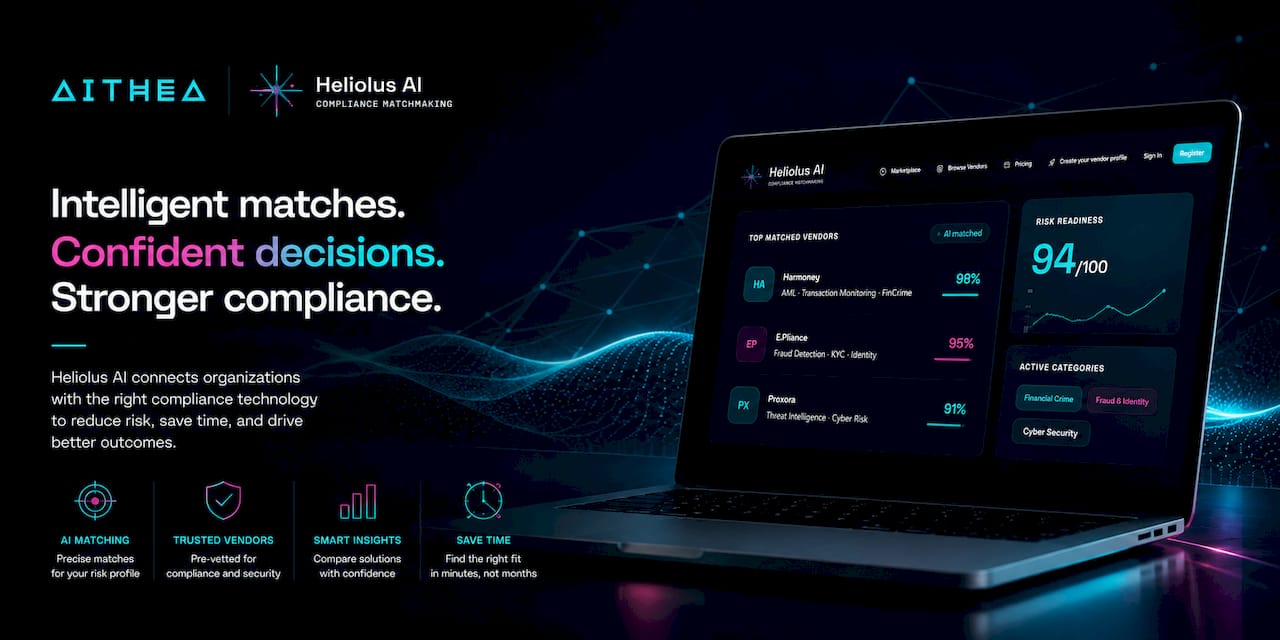
Building the case for a regulation-aware integration architecture is one thing; briefing the right vendors, running the RFP, and avoiding the closed, native-only platforms that create lock-in is another problem entirely, and it is the one Aithea was built to solve. Rather than leaving technology decision-makers to evaluate API documentation and compliance claims vendor by vendor, Aithea's technology matchmaking service brings structured vendor evaluation and procurement support to exactly the kind of regulated case management projects this article has covered.

That means a shorter path from architecture decision to a shortlisted vendor whose REST API, webhook reliability and audit trail design have already been checked against the standards this playbook sets out, rather than discovered halfway through implementation. Aithea also runs compliance education for teams who need to build internal capability around AI-enabled intake and risk stratification, not just buy a platform and hope the operational side follows. If your organisation is scoping an integration project now, get in touch before your procurement window closes and bring the technical specification you have just read to the conversation.
Sources
- Integrated case management programme evidence (systematic discussion)
- Integrated Case Management | Case Management Society of America
- VHA publication on care coordination & integrated case management
FAQ
What are the five principles of case management?
Widely used frameworks describe case management around client-centred assessment, coordinated planning, monitoring, evaluation and advocacy, with CMSA's integrated case management standards building biopsychosocial assessment and stratified risk into that structure.
What are the four types of case management?
The four commonly recognised models are brokerage, clinical, strengths-based and intensive case management, each varying in how directly the case manager coordinates services versus connecting the client to external providers.
What are the seven steps of case management?
Most frameworks describe screening, assessment, care planning, implementation, coordination, monitoring and evaluation, transition or closure, a sequence that regulated bodies like the VHA require to be documented step by step in the electronic record for auditability.
What are the top three qualities a case manager needs?
Strong communication, sound clinical or professional judgement, and organisational discipline consistently top practitioner lists, since a case manager acts as the human link between systems that a technical integration cannot fully replace.
Why does case management integration matter for compliance teams specifically?
Integrated systems create a single, auditable record of case decisions across the tools a compliance team uses, which reduces the manual reconciliation work that causes most audit findings, and platforms built with open REST APIs and webhooks make that record easier to prove.